The fall and rise of orchards.

The establishment and management of orchards in the UK probably started in Roman times. The organised growing of apples, pears, plums and cherries developed during the 1st to 4th centuries of the CE. However, with the withdrawal of the Romans, the management of many orchards declined, though it was maintained in some monasteries. These orchards offered such communities stored / preserved fruit, ‘medicines’ and cider.
Later during the medieval period, orchards were often present in manor houses, outside of villages, monasteries and other community settings. Most of the orchards grew apples and pears, though cherries, plums / damsons were also grown. Moving on to Tudor and Stuart times, these were good times for orchard and fruit expansion in general. A wider range of varieties became available, pruning and grafting techniques improved, as did the layout of trees within orchards. Books were written on fruit and orchard cultivation by people like John Gerard and John Evelyn (his contribution on fruit trees appeared in the appendix of ‘Sylva’ - entitled Pomona); so good practice spread. Some orchards were part of a mixed use landscape, where grazing animals wandered between the trees. 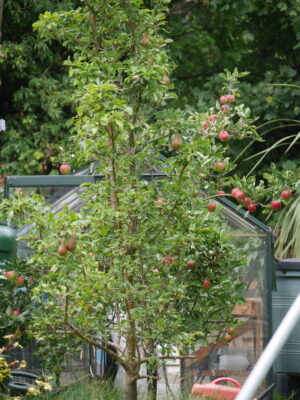 Such orchards are sometimes referred to as ‘heritage orchards’, in contrast to more modern techniques of orchard management.
Further changes took place in the 18th and 19th centuries which saw the introduction of many varieties of fruit e.g. Kentish Cherries and Herefordshire Apples. At this time orchards reached their greatest coverage in our landscape.
However, the 20th century saw a sharp decline in the maintenance and number of orchards. The decline was due to a number of factors :
- Traditional orchards are long lived but require regular management
- Two world wars - these encouraged the use of land for increased food production / arable crops.
- Urban expansion and increased need for housing and transport networks resulted in the loss of many city and village orchards
- Cheaper imports of fruits
- Subsidies and grants supported the removal orchards.
- Also, some orchards survived but heritage / traditional orchards with tall, widely spaced trees were grubbed up and replaced with low stemmed, high density planting. These trees bear fruit after a shorter period of time and the collection of the fruit can be done mechanically. Sadly, such trees support less wildlife.
- Beers and lagers replaced cider as a traditional drink, traditionally it was supplied to farmworkers / labourers.
- Supermarkets wanted fruit that was unblemished with a long shelf life. Plus, the demand for certain apple varieties (e.g cooking apples) fell.
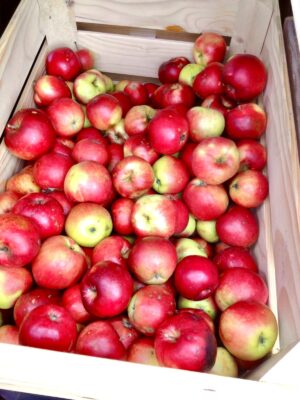 Now, orchards are recognised as valuable habitats and community orchards are being re-established. A community orchard is a shared space, which support fruit and nut trees. The trees grown include apple, pear, cherry, plum, walnut and hazelnut. Sometimes there is an understory of soft fruits, various herbs and plants which support pollinators of the trees. The community orchards are normally looked after by local people or organisations and ‘managed’ by local groups such as ‘not for profit’ organisations, the local council or a specific neighbourhood group. The orchards are usually open access / semi public, with the harvests shared with the volunteers and the local community, providing fresh local food. The harvesting of the fruit, nuts and sometimes vegetables varies from ‘pick what you need’ to ‘an organised distribution’ to ‘local food banks’ and ‘community kitchens’. To find out more about community orchards and if there is one near you - visit the Orchard Network at the Peoples Trust for Endangered Species.

Leave a comment