Woodland web updates 34.
Biodiversity after the Black Death.
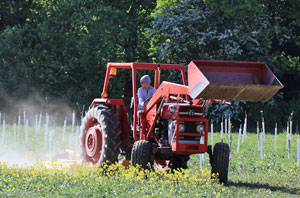
The plague or black death swept across Europe and the UK (from 1347 - 1353, resulting in millions of deaths. Some studies suggest that it killed between a third and half of the population. As a result, there was a much reduced workforce, villages were deserted, farmland was abandoned, traditional land and woodland management fell by the wayside. It was suggested that all of this lead to a significant rewilding event and an increase in biodiversity - both plant and animal.
However, an analysis at York University of fossil pollen studies across Europe suggests a 'different story’. Plant diversity did not increase after the plague, in fact it fell. Plant diversity fell for the next 150 years. This suggests that some plant species depend on the human disturbance within the various ecosystems (farming, grazing, woodland management, all help seed dispersal etc). However, mediaeval practices were far gentler than today’s mechanised, industrial scale farming and the clear cut felling of woodlands. Ploughs were pulled by oxen or hand, woodlands were managed by coppicing etc. So reducing human activity does not always lead to a 'rebound of nature’.
The contribution of small woodlands.
Over the centuries, our woodlands and forests have been ‘decimated’. Our woodland / forest cover has been reduced to a small percentage of what it was by farming, felling, building of transport networks and the expansion of towns and cities. Consequently, there now exist many small patches of woodland in an an agricultural landscape. These ‘islands’ differ in size, degree of isolation, and age. It would be easy to dismiss such ‘islands’ are being of no importance. However, recent studies suggest that they can make a significant contribution to the biodiversity of the landscape, partly through the ‘edge effect’.
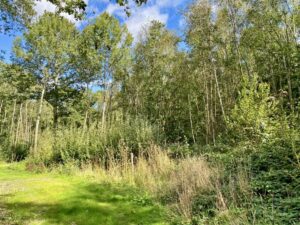 The edges of woodlands are exposed to the surrounding environment. Consequently, they receive more sunlight and often nutrients from the surrounding agricultural land. They are generally richer in species like brambles, hawthorn, willow, offering food for deer, butterflies and other species. They may also store more carbon in the topsoil than older woodlands - acting as carbon sinks. As the edges of these woodlands tend to be drier and hotter than woodland itself, there is a lower risk of tick borne disease as fewer tick larvae survive under such conditions. They are therefore making a significant contribution to diversity and ecosystem services in an agricultural landscape.
Such small and often isolated woodlands need to be managed. so they do not become overrun by ivy and bracken if they are to contribute to the diversity of the landscape. A singular advantage of owning a woodland with an edge is that it may offer a good view of the surrounding landscape, which one might sit and enjoy.
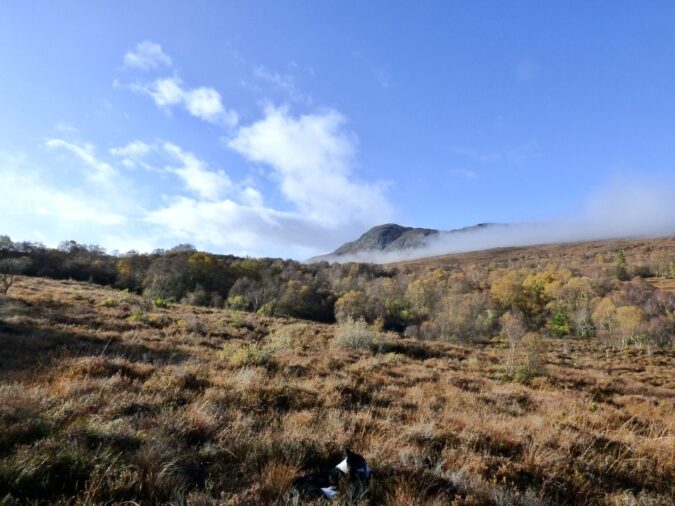
View from a scottish woodland
For further information about the edge effect see Julian Evans' video on woodlandTV at YouTube :
Leave a comment