Plants talk.
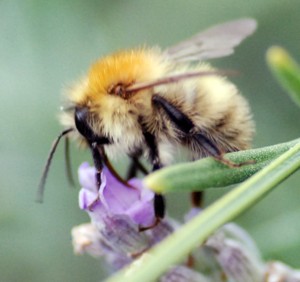
We can communicate in many ways, other animals may message each by vocalising or gesturing. Some release air-borne chemicals (pheromones) to attract a mate. Plants also communicate by chemical signals that they release into the environment. The most obvious example is the release of scents to attract pollinators.
These floral scents are usually oils, made from volatile organic compounds (VOCs). VOCs are carbon based compounds, such as the terpenes. They usually have a strong and pleasant odour. They form partt of the scent of many plants, for example, honeysuckle, roses, jasmine, lilac, and mock orange. Different plants produce different scents. These different chemical signatures help pollinators identify particular species, and locate the nectar on offer. The VOCs produced by ripe fruit help attract animals that assist in seed dispersal.
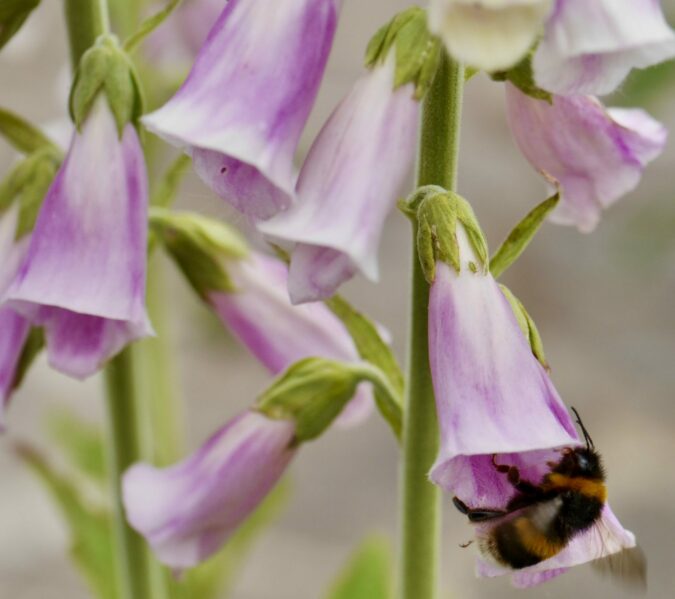
Buff tailed bumblebee visiting a foxglove
VOCs are also produced by leaves when plants are under attack. These may deter the attacking organism directly, e.g. caterpillars, or they may attract an organism that predates upon the herbivore. When pollen beetles feed on oil seed rape, the plants release VOCs which attract the attention of insects (a type of wasp). The wasps lay their eggs in the larvae of the pollen beetles. The pollen beetle larvae are then ‘eaten alive’, by the developing wasp larvae. Sometimes, VOCs are produced by stressed or attacked plants, these VOCs ‘warn’ nearby plants of the same species. These plants can then activate their defences before they are attacked. This helps ensure the survival of some of the population.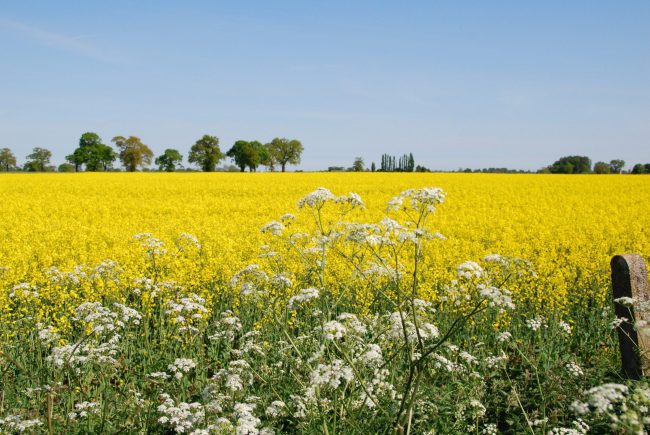
Recently, it has been suggested that mycorrhizal systems act as a physical and chemical ‘means of communication’ between the trees in a woodland, in what has been termed the ‘wood wide web’. The term was coined by Dr. Suzanne Simard, a forest ecologist at the University of British Columbia to describe the complex relationships between fungi and plants in woodland ecosystems.
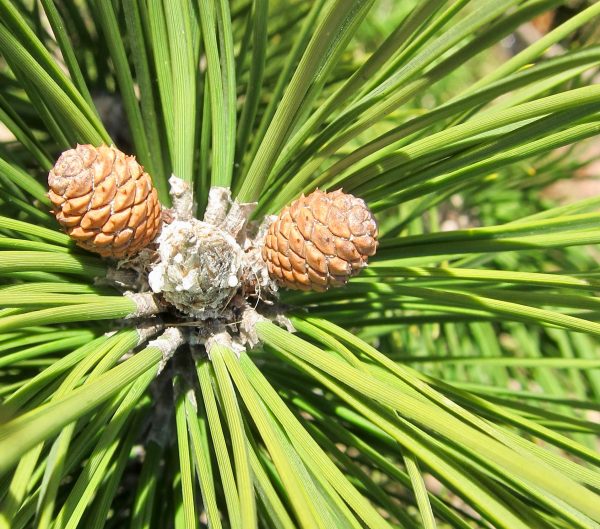
Interestingly, VOCs can influence air quality and atmospheric processes. In a woodland, the scent of pine or other conifers may permeate the air. Pines release volatile compounds, such as alpha-pinene. Recent research has established that these volatile compounds / vapours are not only responsible for the characteristic scent, but also contribute to the formation of aerosols in the atmosphere* both in and around such woodlands and forests. In the presence of sunlight, VOCs can interact with the gas nitric oxide to form ground level ozone, which contributes to smog formation. Forests can be a significant source of VOC emissions.
The production of VOCs is affected by environmental conditions. VOCs release generally goes up with an increase in temperature, as the plants metabolism increase. An increase in temperature also helps in the evaporation / volatilisation of plant oils and scents. Water availability and light intensity also affect VOC release.
* An aerosol is a ‘mixture’ of very small particles (solid or liquid) in air; other examples of aerosols include mist, cigarette smoke, or car exhaust fumes

Leave a comment