Woodlands.co.uk

Blog

Woodland Oaks.

Woodland Oaks.

by The blog at woodlands.co.uk, 10 July, 2026, 0 comments

The oak is a keystone species.  Just as building an arch, the stability of the arch is gained from the positioning of the central stone - the keystone, so in many woodlands oak trees are what holds the woodland together; offering both stability and diversity.  There are two types of oak : The pedunculate oak, which ‘likes’ richer and somewhat heavier soils.  It can be distinguished from the sessile oak as Its acorns grow on long stalks [called peduncles]. The sessile oak, which can grow and survive on poorer and somewhat acidic soils, so can be found in upland areas.  Its acorns sit more or less directly on a twig. Both these oak trees contribute to many woodlands across the UK, and have done so for thousands of years.  Some have great age and are veteran trees. Their life can be between 300 and 800 years.    An oak woodland often represents the climax community in lowland Britain, which has considerable stability.  Because of their long lifespan and great biomass, they also represent significant stores of carbon.  Their extensive canopy also moderates the temperature and humidity of the woodland beneath, allowing for the growth of shade tolerate species such as hazel and holly. The trees also support an amazing diversity of life,  some two thousand species are known to find a ‘home’ in oak trees.  Feeding on the leaves or flowers are hundreds of species of insects - notably moths and butterflies.  The leaves provide food for many species of caterpillars, which in turn are a food source for birds, like the tits and warblers.  The branches of the trees provide nesting and roosting sites for many bird species.  The acorns of the oaks are a rich source of nutrients and energy not only for squirrels, but also mice, deer and other mammals.  Birds, like the jay, also take them.  Jays and squirrels create ‘caches of acorns’, that is they bury them as a store for later.  However, many are forgotten so they effectively distribute the acorns over a wider area and ‘plant’ future oak trees. The bark of the oak is rough and corrugated offering specialised niches for lichens and mosses.  When an oak dies , it is then home to a variety of fungi and beetles, which feed upon the rotting wood (saproxylic beetles).   The roots of an oak penetrate deep into the soil, which helps improve drainage, and the roots establish mycorrhizal connections with soil fungi.  These connections are symbiotic in nature, in that both partners benefit from the association.   The tree gets mineral nutrients from the fungi, and, in return, diverts some of its carbohydrate material to the fungi.  The breakdown of the oak leaves in autumn returns vital nutrients to the soil and provides food to a variety of decomposer organisms, from bacteria to earthworms.  Thus, oaks are a vital part of many woodland food chains.   Sadly, our oaks face a number of threats.  In elizabethan times, the main threat was that of being cut down and used in ship building.  At the height of Nelson’s navy in the late eighteenth century / early nineteenth century it took some 4,000 oak trees, to build a single 100-gun ship, and the navy had some 300 ships!  More recently, there have been problems with acute oak decline and infestation by the oak processionary moth.  The caterpillars of this moth feed on oak trees and large populations can strip an oak tree bare.  This leaves the tree vulnerable to other pests, and stresses such as drought.    Incidentally, contact with the hairs of the older caterpillars of this moth can cause itching, skin rashes and eye irritations, plus sore throats and breathing difficulties in us and other animals.   
Will the ban on social media make nature "great" again?

Will the ban on social media make nature “great” again?

by Angus, 6 July, 2026, 1 comments

Before social media started dominating their lives, younger people were more likely to engage with nature. They played in woodlands, visited parks and went to rivers and beaches regularly. In one of his last pronouncements as Prime Minister, Keir Starmer said that the new ban on under-16s having access to social media is intended to "give kids their childhoods back". Starmer claimed that "Tech giants had their chance and failed."   The Government press release explicitly states that part of the objective is to give children greater access to nature. There are reasons to think it may work. The Australians, who are six months ahead on banning social media for children and young teens, have observed a change in social norms. The ban seems to have empowered parents to discuss children's online habits. They are more likely to suggest outings and limit children's screen time. One business owner I spoke to said that her riding stables have experienced an upturn in demand in advance of the social media ban, and she confidently expects more parents will be signing up their children for riding and volunteering in stables. As she said: "This is the prompt people needed to get away from their screens." In the short term, the social media ban may prove hard to enforce. Three months into their ban, the Australians had established that a full 85% of 12–15-year-olds were still using social media, using various workarounds, such as stating their ages incorrectly, using VPNs and setting up alternative accounts. It seems likely that parental pressure may bring greater enforcement. 116,000 parents responded to the Government consultation about teenage social media, with 90% being supportive of the ban. There is also a raft of parental organisations supporting the ban and wanting it to be enforced, including Mumsnet, which argues that social media should be treated like tobacco or alcohol. But it is not just about children: the Log Off movement argues that social media is bad for all generations. It damages relationships, sleep patterns, self-esteem and mental health.   On the other side of the equation, numerous reports have shown a positive link between visiting woodlands and improved mental wellbeing. Let's face it: social media is a powerful drug, but nature is a healthier one. What is your experience?
Food for the bees.

Food for the bees.

by The blog at woodlands.co.uk, 3 July, 2026, 0 comments

Many of the recent investigations into bees has focused on honeybees and bumblebees, with relatively little research on the problems facing solitary or communal bees.  A  female solitary bee must find a nest, collect pollen, then lay eggs and provide food for her offspring.  In contrast, communal bees share a common entrance to a nest where there are a number of females, but each female maintains her own area and offspring. There is no hierarchy within the communal nest, for example, no queen. It is known that the diet of bees has changed over the years.   In the past, the bees were able to forage and collect pollen and nectar from a wide variety of native plants.  However, the loss of ‘natural wild’ areas means that their diet is often dominated by a small number of plants, such brambles, clover and dandelions. Studies have indicated that some pollens have low levels or lack certain amino acids.  Bees need the same essential amino acids as us.  Without a supply of these particular amino acids  the development and growth of bees is impaired,  disease resistance is reduced the ability to raise the brood is compromised.   So, it is important to find ways to offer our pollinators a range of plants / pollen to provide all their essential nutrients.  An abundance but limited range of flowers (and hence pollen / nectar) will not necessarily meet the needs of the pollinators.  The changing floral landscape may be more challenging for the solitary and communal bees.  Much depends on how far they can forage and how flexible they are in terms of their food sources.  A species that can forage over a wide area and that can collect pollen from a number of different flowers might well survive in a nutritionally deficient area.  Solitary bees that only forage over short distances (when compared to honeybees) are likely to be challenged by the nutritional status of nearby flowers, and the changing agricultural / urban environment.  Poor nutrition could lead to rapid population declines in solitary species.  Bees that live in colonies and have a social organisation can share resources and possibly change their foraging efforts.  It is important that measures are found to support the diverssity of native plants both in rural and urban locations if populations of the various pollinators are to be maintained. Further information on solitary bees and the changing climate can be found here.
The beech tree

The beech tree

by The blog at woodlands.co.uk, 27 June, 2026, 0 comments

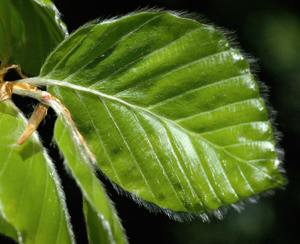
The beech has been referred to as the “Queen of British trees”.   Beech woodlands contribute to the landscape, especially in Southern England.  The tree grows well on free draining soils (like light loam, or those formed on chalk and limestone).  The tree is well represented in areas such as the Cotswolds, The Chilterns and the Downs. A mature tree can reach a height of some 40 metres, with a large, dense and domed canopy.  In Spring, its leaves emerge from the cigar shaped buds and are edged with ‘silky hairs’.  At first, they are a bright, lime green colour but darken as they mature.  In winter, the leaves exhibit the phenomenon of marcescence, that is they wither and turn brown during the autumn but many are retained on the tree (or bush when used as hedging) for some months.  The dense canopy favours the growth of species like Dog’s mercury, certain orchids and the red helleborine in the ground flora.  Holly, white beam and Yew may also grow forming a sub-canopy.  Beech also provides a home for rare species such as the ‘cheese snail’ (Helicodonta obvoluta) and rove beetles. [caption id="attachment_22185" align="aligncenter" width="704"] Beech Buds[/caption] When fertilised the flowers produce nuts, that is edible seeds called beech mast.  The seeds are an important food source for many woodland animals, such as mice, voles, birds and squirrels.  In the New Forest, pigs are allowed to feast on the nuts, especially in those years when the nuts are produced in copious quantities. Beech trees are notable for the mycorrhizal associations that they form.  Fungi that are often associated with these symbioses include Fly agaric Beechwood sickener Porcelain fungus False truffle Beech milksop Rooting bolete The fungal threads (hyphae) extend out from the roots into the soil, help access to minerals (such as phosphate and nitrate) and water.  In return, the fungi receive a supply of carbohydrate. It has been suggested that these fungi may connect one tree to others in the wood, forming what has been termed the wood wide web. The benefits of mycorrhizal associations include Nutrient uptake Greater drought resilience Defence against pathogens Improvements in soil ‘structure’ Despite these fungal associations, beech trees are susceptible to drought. They have a relatively shallow rooting system. After the drought in the summer of 1976, many beech trees died.   It is perhaps not surprising that people are concerned about the ‘health’ of beech trees in light of climate change.  This is bringing warmer winters, periods of droughts and extreme weather, all of which can reduce growth.  Indeed, a study by researchers at the University of Liverpool looked at beech growth as measured by analysis of annual growth rings and masting data [over more than forty years], found that growth was indeed reduced (by circa 28%).  Resources were directed towards reproduction {seed production / masting} rather than growth. This shift in weather patterns may see the range of beech trees moving northwards over a period of time. Beech trees may persist for many years so that trees reach ‘veteran status’, offering habitats such as hollows, cavities and dead wood.  These offer homes for birds, beetles and various wood boring insects. Conservation of beech woodland focuses on Promoting natural regeneration  Retaining / protecting veteran trees Reducing the grazing pressure / damage of deer and grey squirrels.
Heat waves and urban heat islands

Heat waves and urban heat islands

by The blog at woodlands.co.uk, 21 June, 2026, 0 comments

Mosses and lichens are often overlooked as part of the woodland flora.  The same is true in towns and cities.  They can be found on the trunks of trees, on walls and rooftops.  They are epiphytes, that is,  plants which grow on the surface of another plant. They derive moisture and nutrients from the air, rain, and debris that is deposited on and around them. They cling to these surfaces, come rain or shine.  Climate change and pollution affects these small, often unnoticed plants in both woodland and urban settings.    As global temperatures continue to rise, many places face extremes of temperature.   Heat waves are becoming more common, as we have recently experienced.  Some 1500+ heat-associated deaths were recorded in England during the heat waves of  last summer [2025].    The highest rates were among elderly individuals [aged 85+] with the impacts felt particularly in care homes and hospitals.   London and the East of England recorded the highest number of heat-associated fatalities. Cities and urban environments often face the brunt of these climate extremes.  The concrete, brick and tarmac of cities absorb and hold onto the sun’s energy creating ‘urban heat islands’. Urban temperatures are often several degrees higher than surrounding rural areas. Urban temperatures have soared in recent times, for example in New Delhi, a record high of 126.1oF (52.3oC) was recorded. Such temperatures claim lives. This year parts of Europe have recorded temperatures of 40oC. Urban trees suffer in this heat as do their epiphytic flora.  The mosses and lichens in our cities fall into this category.  Researchers at Leiden University have investigated the effect of changing temperatures on the mosses and lichens growing on Lime (Linden) trees in Dutch cities (Amsterdam, Leiden, and Rotterdam).  They sampled numerous sites, measuring the microclimate for each tree and recording the species present.  They found, perhaps unsurprisingly, that urban heat islands were reshaping the moss and lichen communities.  Species that were adapted to drier, brighter and nitrogen-rich environments were favoured; for example, a type of wreath lichen [Phaeophyscia orbicularis]. When wetted this turns from a grey / brown colour to green, and its symbiotic green algae can begin to photosynthesise producing sugars. Those species that were associated with moister and shady conditions were found to be ‘losing out’.  They noted that the larger lime trees supported more diverse epiphyte communities; this might be associated with the older bark offering more micro-habitats for the mosses and lichens to ‘gain a foothold’.   [caption id="attachment_41261" align="aligncenter" width="675"] Lichens on an old stone wall.[/caption] The changing climate and urban heat islands are altering the species that can survive in our towns and cities, on trees and artificial surfaces.
Yew leaves arranged in rows

The yew, a native conifer.

by The blog at woodlands.co.uk, 17 June, 2026, 0 comments

The yew is one of our native conifers, the others are the Scots Pine and Juniper.  The yew is exceptional in terms of its longevity.  The life span of the tree may run into the thousands of years, but more typically a tree may live for 1500 years.  Somewhat unusual features of the Yew are that   it is dioecious. That is, there are separate male and female trees.  This promotes cross fertilisation, increasing genetic diversity. when it sets seed, they are not in the typical conifer cone. They form in a fleshy red aril - a berry-like structure The yew is a medium sized conifer, that may reach a height of some 20 metres.  It has dark green needle-like leaves, which are somewhat flattened (see image).  The bark has a red / brown colour, which has an increasingly flaky appearance as the tree ages.  Again as the trees mature they may develop hollow trunks and splinter apart to form multiple stems.  This seems to be a regenerative strategy. This is particularly apparent in the Fortingall Yew, which is indeed is a very ancient tree, possibly the same age as Stonehenge! [caption id="attachment_43351" align="aligncenter" width="700"] Yew in a woodland setting[/caption] The Yew is distributed across the UK but is found more often in Southern and Central England, where it is associated with well drained soils seated on chalk and limestone.  It is also to be found in managed situations, ranging from church yards, large estates and parklands, to hedgerows in urban gardens.  In some places, the trees are managed to form topiary.     Yew trees can thrive in woodlands settings, though its dense evergreen canopy can create deep shade at ground level.  As the light intensity is reduced, this can reduce the diversity of the ground flora.  However, the trees offers shelter in the winter months to various birds (such as the Chaffinch, Robin, and Wren) and mammals.  Most of the tree is toxic, the only edible part is the red aril that surrounds the seeds.   The seeds contain high concentrations of taxine alkaloids, which if ingested interfere with the electrical signals in the heart.  In recent years, yew trees have been planted in large numbers in China to provide material for the extraction of one of its toxic chemicals for the anti-cancer drug taxol/paclitaxel. This drug acts by interfering with the division of cancer cells.  However, some birds can eat the aril and the seed, the seed then passes through the gut undigested.  This aids the dispersal of the seeds over a significant area  The toxicity of the tree is important in that it protects against grazing by deer etc.  Yew wood is noted for its red/brown colour and its durability.  In the past, it was greatly valued in the making of long bows due to its flexibility and strength.  The rich colour and grain of the wood mean that is used to make veneers and in furniture making.  As the wood is hard and dense, it is favoured by woodturners to create bowls and lamp bases.  The wood is also used in the making of violins and other musical instruments.  Yew wood is remarkably resistant to decay / rot, which makes it particularly suitable for outdoor furniture.  However, as the tree is slowing growing and often ‘twisted’ and/or knotted, it is difficult to obtain large planks of the wood in any quantity. For many centuries, Yew has been associated with churchyards and this is where many ancient yews are to be found.  In a Christian context, the yew represents eternal life and resurrection. Its evergreen nature being symbolic of eternal life. Some yews may predate the building of the churches, pagan tradition associated the tree with winter festivals and the cycle of life.  Further details of the association of Yew with religion and folklore, see https://www.whitedragon.org.uk/articles/yew.htm
David Hockney and the Trees

David Hockney and the Trees

by Angus, 14 June, 2026, 0 comments

My own experience of David Hockney was an extraordinary set of bright images of trees and woodland at an exhibition in Saltaire in West Yorkshire. His death marks the passing of one of Britain's greatest artists. Many will remember him for his Californian swimming pools, his portraits and his restless experimentation with new technology. Yet some of his most original and affecting work came from a much simpler source: trees.   In the last two decades of his life, Hockney became fascinated by the woods and forests of northern England. Again and again he returned to the same stretches of woodland in the Yorkshire Wolds, painting them through winter, spring, summer and autumn.  Like a naturalist studying a favourite species, he observed every change in colour, structure and light. The centre of this obsession was a small area of woodland near the village of Warter in East Yorkshire. Here he found the subject that would occupy him for years. The trees themselves were not particularly famous or ancient. They were ordinary beeches, ashes, sycamores and hawthorns growing beside country roads and in modest woods. Yet Hockney saw something extraordinary in them. Their branches formed intricate patterns; their colours shifted with every season; their appearance changed from hour to hour as the light moved across them.  His masterpiece Bigger Trees Near Warter was the culmination of this fascination. Stretching more than fifty feet across, it transformed a relatively unremarkable patch of Yorkshire woodland into one of the most ambitious landscape paintings produced in Britain for generations. The work depicts trees in winter, stripped of their leaves. Without foliage to distract the eye, the viewer is drawn into a maze of branches and trunks. Hockney turns the woodland into something almost architectural, a vast structure built from living wood. What distinguished Hockney's woodland paintings was his refusal to treat trees as background scenery. In much traditional landscape art, trees frame a view or provide decoration. For Hockney they were the main event. He painted individual trunks, tangled roots, branches reaching skywards and the spaces between them. He once remarked that trees are among the most complex things we ever look at, yet most people hardly notice them. His favourite location became the lanes around Warter, Garrowby and the nearby woods of the Yorkshire Wolds. These landscapes appear repeatedly in works such as The Tunnel, October-November, Woldgate Woods and May Blossom on the Roman Road. The same roads and woodland rides recur year after year, allowing viewers to witness the changing seasons almost as if they were watching a film.  In later life Hockney found a new woodland inspiration in Normandy. There, he rented a farmhouse surrounded by trees and produced hundreds of paintings and iPad drawings recording the arrival of spring. Blossom erupted across orchards and woodland edges. Fresh leaves appeared almost overnight. His celebrated series A Year in Normandy captures the seasonal cycle of a landscape seen with extraordinary attentiveness and joy. Hockney's paintings remind us that forests are not static places. They are constantly changing communities of light, colour and growth. He showed that a roadside copse in Yorkshire could be as worthy of artistic attention as the Alps or the Grand Canyon. More than perhaps any modern artist, he taught us to look carefully at trees.   That may prove his most enduring legacy. Long after the swimming pools fade from memory, the woods of Yorkshire and Normandy will remain alive in his paintings: places where he discovered wonder in every branch and every leaf.  
A bad year for bumblebees

A bad year for bumblebees

by The blog at woodlands.co.uk, 12 June, 2026, 1 comments

Last year was not a good year for bumblebees.   Despite the warmth and sunny days of late Spring and Summer, they did not fare well.  Overall, numbers dropped by about a fifth.  We know this thanks to the efforts of the Bumblebee Conservation Trust.  The trust runs a nationwide bee walk scheme each year.  This involves hundreds of trained volunteers, walking across a thousand plus fixed routes, counting the bumblebees that they see.  This enables the Trust to calculate the number of bumblebees observed for each kilometre walked. This gives a measure of the health of bumblebee populations. Last year’s walks indicated ‘historic lows’ for 15 of our native species of bumblebee.  Red tailed bumblebees were particularly affected. After a relatively mild winter, many queen bumblebees emerged early from hibernation.  They then met with the rain and cold of early Spring. Though a bumblebee can cope to some degree with cold - by shivering to generate heat, the rain left them unable to forage in search of pollen and nectar.  Queen bumblebees have to establish a colony singlehandedly.  They may lay eggs, but if they remain within the nest to keep the larvae warm then they starve.  If they leave to find food then the larvae die in the cold.   So the weather is critical to the establishment and success of a colony.  The first brood of eggs need to be warmed by the queen, but she needs to be able to leave to feed herself and collect food for the growing larvae.  Last year, the establishment of colonies and rearing of the first generation of worker bumblebees was limited.  Indeed, it was estimated that the worker population in June fell by perhaps 50% for some species. [caption id="attachment_43455" align="aligncenter" width="675"] Coming into land[/caption] Sadly, the disappointing numbers for 2024 is part of a long term decline in bumblebee numbers, with some species become extinct (either locally or nationally).  This decline is associated with  Changing climate.  With global warming, we are experiencing warmer, wetter winters and hotter, drier summers, coupled with extreme weather events.  Bumblebee nests can be flooded by heavy rain. Habitat fragmentation.  Many woods and wild flower meadows have been lost over the decades, so that bumblebees (and other animals) find it difficult to move around in the disconnected landscape. Biological corridors have been lost.  Local populations can become inbred, which leads to a loss of genetic variation.  Flower-rich meadows which offered pollen and nectar are now a rarity.  Even brownfield sites can offer food for bumblebees - from the ‘weeds’ growing in them. The expansion of agriculture, towns and motorways. The countryside has been gradually devoured by the expansion of agriculture, towns and transport routes. These have contributed to the loss of natural ecosystems, like the meadows mentioned above, and also hedgerows. Modern agriculture also makes considerable use of many pesticides and herbicides.  The neonicotinoids [neonics] were used extensively as seed dressings for crops, such as oil seed rape and maize.  Even when exposed to very low concentrations of these chemicals, bees and bumblebees suffered. More recently it has been demonstrated that sulfoxaflor, another pesticide affects bumblebees.  It can reduce the number of workers and queens produced by a colony by 50%. [caption id="attachment_43460" align="aligncenter" width="675"] buff tailed bumblebee[/caption] As ever, local bumblebee populations can be helped by ensuring that gardens have a wide diversity of nectar-rich flowers, plus “No mow May” also has a positive impact.  

Next Page »