Changing the welsh landscape

Woodlands make up only 15% of the land cover in Wales. Much of the land use is intensively farmed grassland. However, it is the expressed intent of the Welsh Government to create thousands of hectares of new woodland (by 2050) as part of the Net Zero Wales plan. The creation of new woodland will capture and store large amounts of carbon, through the uptake of carbon dioxide for photosynthesis. However, it will have another important benefit, it will help promote insect diversity. Insect numbers have declined in recent years.
A significant survey was conducted by the Centre for Ecology and Hydrology and Butterfly Conservation Wales. It involved surveying some 300 sites (1 km x 1 km) across Wales. It found that:
- There were up to twice as many insects in woodland areas as compared to farmed grassland areas, and
- Hedgerows made an important contribution to insect abundance. Without hedgerows, the number of pollinators in farmland areas could fall by 20%+.
The type of tree cover is also important. Timber plantations, which tend to be monocultures, do not offer much benefit to pollinators. Pollinators tend to do well along the edges of and gaps in natural (deciduous) woodland. Woody shrubs and tree species in hedgerows and woodland offer:
- Food for insect larvae, many of which feed on leaves.
- Nectar and pollen for adult insects
- Nesting sites and shelter for a variety of animal species
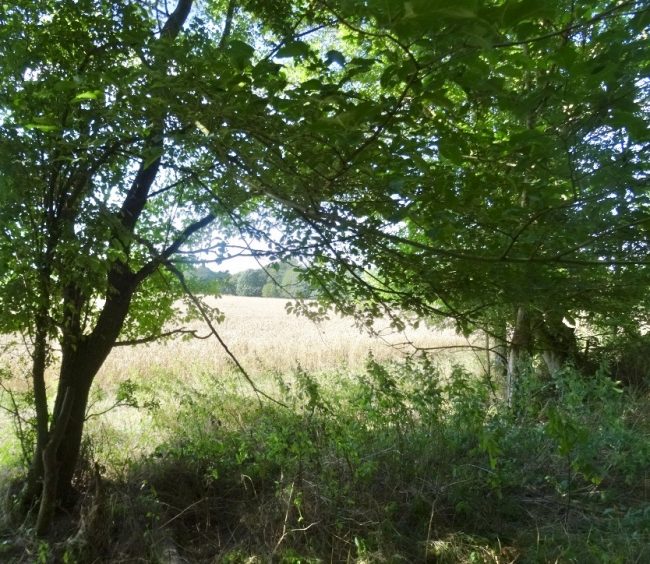
Woodland edge
The report stressed the importance of natural pollinators (as opposed to managed honeybees) such bumblebees, carder bees, communal bees, hover flies, butterflies and moths.
Further details of the report can be found here
Leave a comment